Public Health is investigating an outbreak of Shiga toxin-producing E. coli O157 (called STEC) associated with food from Tokyo Stop Teriyaki. We are aware of five King County residents who have gotten sick with the same type of STEC using DNA fingerprinting (whole genome sequencing or WGS) after eating food from Tokyo Stop Teriyaki in Bellevue before becoming sick. It is likely these five people became sick from contaminated food served at Tokyo Stop Teriyaki.

There is one additional person in King County whose illness matches the other five cases by WGS and did not report eating food from Tokyo Stop Teriyaki. This means their illness may have come from another source that is unrelated to Tokyo Stop Teriyaki or may be due to a contaminated food product served at this restaurant and elsewhere. 

The investigation is still in progress, and we need your help. 

If you ate at Tokyo Stop Teriyaki in November or December 2025, and later developed symptoms such as nausea, vomiting, stomach cramps, diarrhea (including bloody diarrhea), or fever, please fill out our survey: STEC Outbreak Questions. This may help us identify the potential source of STEC infections and prevent future outbreaks.

The sick people reported signs of STEC, including nausea, vomiting, stomach cramps, diarrhea (including bloody diarrhea), and fever. Four people were hospitalized and recovered. 

We have not found any sick restaurant workers at Tokyo Stop Teriyaki.

On December 12, 2025, we asked the restaurant to close. We visited the restaurant on December 13 and found several problems that could have contributed to this outbreak:

  • Sinks for washing raw meat and vegetables were placed too close together
  • Tools and surfaces used for raw meat like chicken, weren’t sanitized properly

We worked with the restaurant to improve their food safety practices and do a full cleaning and disinfection. When we returned on December 15, we confirmed that the cleaning was done properly and that they were following required food safety procedures. Based on this, they were allowed to reopen.

All six people who became sick tested positive for the same type of STEC (O157), using DNA fingerprinting (whole genome sequencing or WGS).

Will Humble, Executive Director, AZ Public Health Association, joined “Arizona Horizon” to share how changes in the State Health Department have led to health concerns, and how illnesses are seemingly tame for this time of year.

The series of E. coli cases that occurred (possibly linked to State Fair petting zoo), because of the state fair, has raised cause for concern. Previously, vendors were required to have a flow through pattern, so kids had to wash their hands after exiting the exhibit, but that was no longer a requirement this year.

Prevention for visitors to petting zoos and agricultural fairs

Do:

  • Wash hands
  • Before eating or drinking or preparing foodAfter petting or being around animals or their pensSupervise children’s hand washing
  • Hand sanitizers are not a as effective as hand washing and shouldn’t be used as a substitute for hand washing!
  • Wash Clothing after visiting animals
  • Keep young children’s toys, pacifiers, and blankets outside of animal interaction areas.

Don’t:

  • Eat or drink in animal areas.
  • Bring pacifier, strollers, toys or spill-proof bottles into animal areas.

See www.fair-safety.com 

November 13, 2025

One additional Washington resident has been added to this outbreak, bringing the total to 10 cases – 9 Washington residents and 1 Oregon resident. All cases report illness onsets before the cheese was recalled on October 24, 2025. 

November 6, 2025

Samples of Twin Sisters Creamery cheese have tested positive for two different STEC strains associated with human cases: E. coli O103 and E. coli O26. 

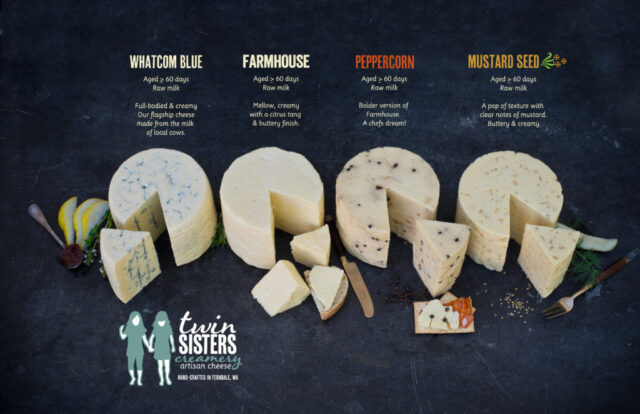
Two Washington residents and one Oregon resident have been infected with E. coli O103. Molecular fingerprinting of the E. coli O103 bacteria from the three cases is extremely similar to the E. coli O103 identified in both the Twin Sisters Creamery Farmhouse and Whatcom Blue cheeses. 

Six Washington residents have been infected with E. coli O26. Molecular fingerprinting of the E. coli O26 bacteria from the six cases is extremely similar to the E. coli O26 bacteria identified in the Twin Sister’s Creamery Peppercorn Farmhouse cheese.   

Twin Sisters Creamery brand cheese sampleWhere CollectedWhere TestedShiga
Farmhouse variety (opened)Case’s HomeCommercial LabE. coli O103
Whatcom Blue varietyRetail StoreWashington State Department of AgricultureE. coli O103
Peppercorn Farmhouse variety (unopened)Case’s HomeFood and Drug AdministrationE. coli O26
Farmhouse varietyRetail StoreWashington State Public Health LabE. coli NOS*

*NOS: Not otherwise specified–this strain of Shiga toxin E. coli is not typeable at the Washington State Public Health Lab

Two Whatcom County residents are known to have been sickened, and test results showed a genetic link between their illness and Twin Sisters Creamery products. An additional case in Oregon has also been genetically linked. One is a child under five years old, and two are adults. One person was hospitalized. All illnesses occurred between September 5 and September 16, 2025. Specific or additional products may be recalled or identified as a possible source of infection in the future.

Multiple varieties of aged raw milk cheese from Twin Sisters Creamery are in the process of being recalled after testing linked E. coli bacteria from three cases to the company’s cheese. Twin Sisters Creamery is cooperating with the investigation. Additional products may be recalled or identified as a possible source of infection in the future. 

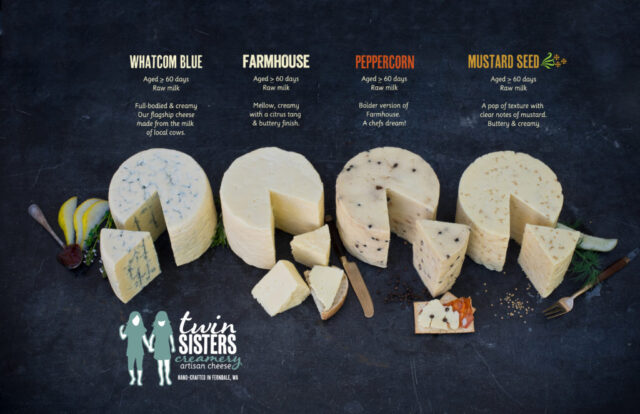
All sizes of Whatcom Blue, Farmhouse, Peppercorn and Mustard Seed cheese varieties from Twin Sisters Creamery produced on or after May 27, 2025 are being recalled. 

◦ #450 Made on 5/27/2025 – Batch Code 250527B Whatcom Blue
◦ #452 Made on 6/10/2025 – Batch Code 250610B Whatcom Blue
◦ #454 Made on 6/18/2025 – Batch Code 250618B Whatcom Blue
◦ #455 Made on 6/24/2025 – Batch Code 250625B Whatcom Blue
◦ #451 Made on 6/03/2025 – Batch Code 250603F Farmhouse
◦ #453 Made on 6/16/2025 – Batch Code 250616B Farmhouse
◦ #451 Made on 6/03/2025 – Batch Code 250603P Peppercorn
◦ #453 Made on 6/16/2025 – Batch Code 250616 Mustard Seed

Some cheese products were repackaged by grocery stores and markets, so the original label may not be present. In these instances, the grocery store/market label should list the cheese brand.

Marler Clark has represented victims in several high-profile E. coli outbreaks linked to contaminated cheese. The firm’s history with these cases primarily involves raw-milk cheeses, but its broader work covers many foods. 

Key lawsuits involving cheese

  • Bravo Farms Gouda Cheese (2010):Marler Clark represented multiple individuals sickened in a 2010 E. coli O157:H7 outbreak linked to Bravo Farms Dutch Style Gouda.
    • The contaminated cheese was sold at Costco stores, with at least 38 people in five states confirmed ill.
    • The firm filed multiple lawsuits against Bravo Farms on behalf of the victims, some of whom were seriously sickened after attending a Costco “cheese road show”.
  • Raw Farm Cheddar Cheese (2024): In 2024, Marler Clark filed a lawsuit on behalf of victims in a multistate E. coli O157:H7 outbreak linked to Raw Farm brand Raw Cheddar cheese.
    • The outbreak, which ended in March 2024, included 11 confirmed illnesses and five hospitalizations across multiple states. Two people developed hemolytic uremic syndrome (HUS), a life-threatening form of kidney failure.
    • While product tests by health officials were negative, epidemiological evidence strongly implicated the Raw Cheddar cheese as the source.
  • Canadian Raw Milk Cheese (2013): Marler Clark reported on an E. coli outbreak and death in Canada linked to raw milk cheese.
    • The recall included raw milk Gouda, Parmesan, and other cheeses from a manufacturer in British Columbia.
    • While the victims were in Canada, Marler Clark is experienced in cross-border foodborne illness litigation and covered the case through its blog. 

Related raw dairy cases

The firm’s work on E. coli illnesses from raw cheese is part of a larger focus on unpasteurized dairy products. Other similar cases include: 

  • Organic Pastures Raw Milk (2008): In 2008, Marler Clark filed E. coli lawsuits against Organic Pastures on behalf of children who developed HUS after drinking its raw milk products.
  • Dee Creek Farms Raw Milk (2005): The firm represented families of children who were severely injured by E. coli from unpasteurized milk from Dee Creek Farm in Washington State.
  • Cozy Valley Creamery Raw Milk (2012): Marler Clark filed a lawsuit on behalf of a child hospitalized with HUS after consuming raw milk from Cozy Valley Creamery in Washington. 

Broader context of Marler Clark’s work

Since its founding, the firm has represented victims in most major foodborne illness outbreaks in the United States. Its notable history includes: 

  • 1993 Jack in the Box E. coli Outbreak: The firm gained national prominence representing victims, including a record $15.6 million settlement for a young survivor.
  • 1996 Odwalla E. coli Outbreak: The firm represented most victims of the E. coli outbreak linked to unpasteurized apple juice.
  • Work with various food types: The firm has litigated E. coli cases involving ground beef, lettuce, spinach, and sprouts, alongside its numerous raw dairy cases. 
https://www.marlerblog.com/files/2025/08/TN25-058-Outbreak-Summary_Final_7.31.25_Redacted.pdf

Really well done investigation by Tennessee DOH – however, yet another example of a DOH NOT telling a victim of the cause of their illness. I made the call to the family of the child that died today. I do not understand why DOH would not have done this?

Background

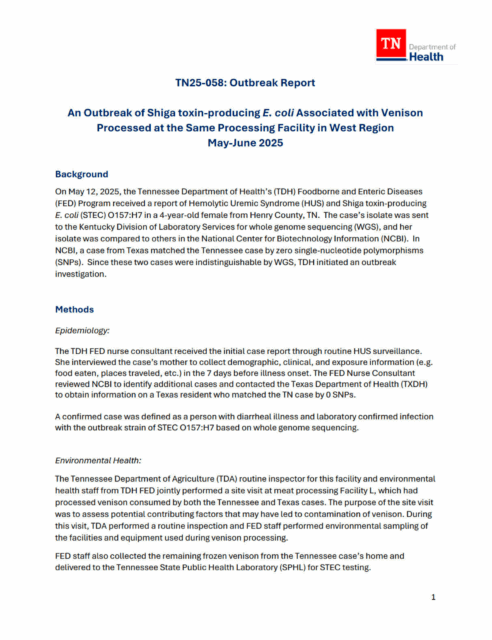
On May 12, 2025, the Tennessee Department of Health’s (TDH) Foodborne and Enteric Diseases (FED) Program received a report of Hemolytic Uremic Syndrome (HUS) and Shiga toxin-producing E. coli (STEC) O157:H7 in a 4-year-old female from Henry County, TN. The case’s isolate was sent to the Kentucky Division of Laboratory Services for whole genome sequencing (WGS), and her isolate was compared to others in the National Center for Biotechnology Information (NCBI). In NCBI, a case from Texas matched the Tennessee case by zero single-nucleotide polymorphisms (SNPs). Since these two cases were indistinguishable by WGS, TDH initiated an outbreak investigation.

Epidemiology

The TDH FED nurse consultant received the initial case report through routine HUS surveillance. She interviewed the case’s mother to collect demographic, clinical, and exposure information (e.g. food eaten, places traveled, etc.) in the 7 days before illness onset. The FED Nurse Consultant reviewed NCBI to identify additional cases and contacted the Texas Department of Health (TXDH) to obtain information on a Texas resident who matched the TN case by 0 SNPs.

A confirmed case was defined as a person with diarrheal illness and laboratory confirmed infection with the outbreak strain of STEC O157:H7 based on whole genome sequencing.

Environmental Health

The Tennessee Department of Agriculture (TDA) routine inspector for this facility and environmental health staff from TDH FED jointly performed a site visit at meat processing Facility L, which had processed venison consumed by both the Tennessee and Texas cases. The purpose of the site visit was to assess potential contributing factors that may have led to contamination of venison. During this visit, TDA performed a routine inspection and FED staff performed environmental sampling of the facilities and equipment used during venison processing.

FED staff also collected the remaining frozen venison from the Tennessee case’s home and delivered to the Tennessee State Public Health Laboratory (SPHL) for STEC testing.

Laboratory

Stool specimens were tested at the Kentucky Division of Laboratory Services for the Tennessee case and at the Texas Department of State Health Services Public Health Laboratory for the Texas case. The Tennessee case’s stool was tested on a GI molecular panel (QIAstat-Dx) at the hospital laboratory. The isolate was sent to Kentucky Division of Laboratory Services where stool culture and subsequent whole genome sequencing were performed. The Texas case’s stool was culture positive ElA at a commercial laboratory then forwarded to a local health department’s laboratory with PFGE performed and positive ElA resulted. The sample was then sent to Texas DSHS, culture confirmed and whole genome sequenced performed inhouse.

The TN SPHL tested 14 environmental swabs and processed venison meat samples using the FDA BAM method for STEC PCR a n d culture. A total of 23 packs of venison meat were received which included 17 ground meat, 5 backstrap, and 1 loin. To ensure all meat was tested, portions from two packs were pooled for testing, while the loin was tested separately. This strategy allowed for the testing of the entire 40 pounds of venison among 11 pooled ground meat and backstrap samples and 1 individual loin sample.

Epidemiology

The Tennessee case became ill on May 5, 2025, and symptoms included fever and hives. On May 7, 2025, she developed bloody diarrhea and was hospitalized at the Murray Calloway County Hospital in Murray, KY. A stool sample was collected on May 8, 2025, and tested positive for STEC O157:H7. On May 10, 2025, she was transferred to Vanderbilt Children’s Hospital in Nashville, TN and diagnosed with HUS. The case died at Vanderbilt Children’s Hospital on May 12, 2025.

The case’s mother was interviewed with a standard case report form on May 13, 2025. Exposures reported by the case’s mother included daycare, eating chicken at a fast food and a Mexican restaurant, contact with a family member who worked as a farrier on farms in Kentucky and Tennessee, contact with a horse and a donkey at home, private well at home, likely eating venison processed at Facility L in Puryear, TN, drinking unpasteurized goat’s milk provided by a private individual, and eating fresh strawberries, raspberries and mangoes purchased at Wal-Mart. The case’s mother reported local travel only for daycare (Benton, KY) and restaurants (Murray, KY and Paris, TN). No recreational water exposure was reported. The case’s mother reported she had diarrhea the week before the child’s illness, the case’s father reported vomiting the week before the child’s illness, and the case’s 11-month-old sibling had fever and one day of diarrhea the week before the child’s illness. None were reported to seek treatment or testing.

After finding the genetically related case in NCBI, TDH reached out to TXDH to see if the Texas case shared any common exposures. The Texas case’s illness onset was November 17, 2024. Symptoms experienced by the Texas case included bloody diarrhea, fever, vomiting, nausea, chills and abdominal pain. The Texas case visited the emergency room but was not hospitalized and did not develop HUS. The duration of illness was 15 days. The father stated the case, and her family traveled to Murray, KY, a week before her illness onset.

Other exposures shared between cases were either eating or having contact with deer processed at meat processing Facility L, family members who are farriers, and the Texas case and her family traveled to the same area of Kentucky where the Tennessee case resided.

Environmental Health

No immediate violations or practices that could have contributed to m e a t contamination were identified during the site visit. The facility employs 10 people and noted no facility issues during their venison processing period.

During deer season (end of October through early January), pork and beef processing is ceased at this facility to focus solely on venison. No venison is processed outside this window of time. When a deer is brought to the facility for custom meat processing, butchers on staff assess the deer visually to ensure the meat looks appropriate for processing (i.e., meat is appropriate color, no bugs). The deer is then field dressed (if not already done outside of the facility). brought inside, placed onto hooks, skinned, and offal removed prior to being placed in a walk-in blast cooler for at least 1-2 days at 32°F prior to further processing. The meat is then washed with a warm wash and sprayed with vinegar water before cooling again for 3-4 days at 35°F.

Following cooling, the meat is brought into the processing room where it is cut into steaks or ground prior to being packaged in vacuum sealed packages or sausage casings according to the customer’s preferences. Any spices used are pre-packaged from a commercial spice supplier. The meat is then labeled and placed into a walk-in freezer for at least 36 hours to fully freeze prior to notifying the customer to pick it up.

Each night, all equipment is disassembled, and the entire facility is cleaned by an independent cleaning service. No product is co-mingled other than in the machines – grinders and stuffers are not cleaned between individual deer.

Environmental samples were collected in each of the processing rooms in places that would have had contact with venison meat. Of note, sampling was done over 5 months since the last deer oF the 2024-2025 deer season was processed at the facility.

Laboratory

The Kentucky Division of Laboratory Services and the Texas Department of State Health Services Public Health Laboratory isolated STEC O157:H7 from the Tennessee and Texas cases, respectively. Whole genome sequencing results for the clinical STEC isolates indicated relatedness within 0-5 SNPs and 0 alleles by cgMLST. No other isolates were closely related to these two clinical isolates in the NCBI dendrogram.

Approximately 40 lbs. of frozen meat from one deer were collected from the Tennessee case’s home for testing. All samples were PCR and culture negative for STEC.

One environmental sample was PCR positive for STEC, but STEC was not isolated by culture. Without a cultured isolate, no WGS could be performed on this sample to see if it matched the outbreak strain of STEC O157:H7. This sample was collected from a hide pull that is used exclusively for venison. The chain, floor plate, bolts, and plate-chain attachment were swabbed

Discussion

This STEC )157:H7 outbreak had a suspected link to contact with deer processed at the Facility L in Puryear, TN. Whole genome sequences of the two human stool STEC O157:H7 isolates were identical, indicating a common exposure that was epidemiologically identified through case interviews. Other common exposures may have contributed to illness, including travel to similar areas of Kentucky and Tennessee, and family members of both cases who worked as farriers. However, investigators could not find any connection where the farriers would have worked with one another or had contact with similar people. Also, there were no common restaurants or events in Kentucky a n d Tennessee shared by the two cases seven days before their illness onset.

Furthermore, venison is a rare exposure among STEC cases in Tennessee, with approximately 2% of all STEC cases annually reporting contact with any wild game meat, including venison. The rarity of this shared exposure, combined with the link to a shared processing facility, contributed to a high level of suspicion of venison as the suspected source in this outbreak over other possible modes of transmission.

The literature reports outbreaks of O157:H7 linked to venison contact and consumption (Kenne al., 1997; Smith-Palmer et al., 2018; Laidler 2013). Shiga toxin-producing E. coli. can colonize in the gastrointestinal tract of ruminant animals such as cattle, goats and deer, and be shed in their feces. Deer, like other ruminant animals such as cattle and goats, can shed STEC in their stool without being ill. Transmission can occur to humans who have contact with the animal’s f e c e s or ingest foods contaminated with their feces.

The absence of STEC in venison from the Tennessee case’s household d o e s does not indicate that the venison was not contaminated. It is possible that the section of the deer that was contaminated was already consumed, or laboratory testing could not isolate the pathogen. Shiga toxin-producing E. coli was detected by PCR on a hide pull swab; however, STEC could not be isolated from this sample. Since STEC was not isolated, G S could not be performed to determine if it matched the outbreak strain. Shiga toxin-producing E. coli was not detected or identified in any venison samples or other environmental swabs from the production facility. This could have been due in part to the lag time between the two cases’ illness onset (November 2024 for the Texas case and May 2025 for the Tennessee case) and the fact that the facility was no longer processing deer for the season at the time of our investigation. Since no environmental samples were culture positive for STEC and no process breakdowns or issues of concern were identified at the facility, no additional public health control measures were implemented beyond the processes already in place.

Safe food handling practices, such as cooking venison steaks and roasts to 145°F and ground venison to 160°F, combined with safe handling during processing, are the best way to prevent STEC and other infections since deer can carry STEC and other bacteria without appearing ill. Young children, older adults, pregnant women, and those who are immunocompromised should not eat undercooked meats and should wash their hands with warm water and soap after being in contact with raw meats or ruminant animals, such as deer. Our investigation found that venison was the most likely common source of infection in this outbreak; however, this could not be confirmed by environmental sampling and testing.

References

Keene WE, Sazie E, Kok J, Rice DH, Hancock DD, Balan VK, Zhao T, Doyle MP. An outbreak of Escherichia coli O157:H7 infections traced to jerky made from deer meat. JAMA. 1997 Apr 16;277(15):1229-31. doi: 10.1001/jama. 1997.03540390059036. PMID: 9103348.

Smith-Palmer A, Hawkins G, Browning L, Allison L, Hanson M, Bruce R, McElhiney J, Horne J. Outbreak of Escherichia coli O157 Phage Type 32 linked to the consumption of venison products. Epidemiol Infect. 2018 Nov; 146(15):1922-1927. doi: 10.1017/S0950268818001784. Epub 2018 Jul 6. PMID: 29976259; PMCID: PMC6452997.

Laidler MR, Tourdjman M, Buser GL, Hostetler T, Repp KK, Leman R, Samadpour M, Keene WE. Escherichia coli O157:H7 infections associated with consumption of locally grown strawberries contaminated by deer. Clin Infect Dis. 2013 Oct;57(8): 1129-34. doi: 10.1093/cid/cit468. Epub 2013 Jul 21. PMID: 23876397.

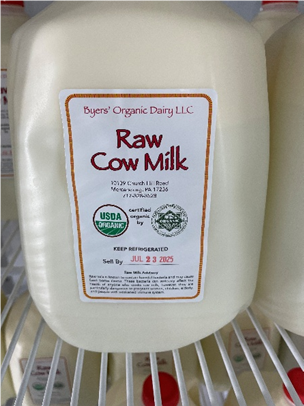
The Pennsylvania Department of Agriculture warns consumers to immediately discard Byers Organic Dairy brand raw milk purchased between July 8 and July 10, 2025, with sell-by dates of July 22 and July 23, 2025. Routine milk samples were tested and confirmed to be contaminated with Shigatoxin-producing E. colibacteria.

Milk was sold in plastic half-gallon and gallon containers at the farm’s store at 10139 Church Hill Road Mercersburg, Franklin County. The store has removed the milk from their shelves, but could not supply a list of customers who purchased it.

Shigatoxin-producing E. coli can make people sick with diarrhea, urinary tract infections, pneumonia, sepsis, and other illnesses. Children under five, adults over 65, and people with compromised immune systems may be at risk.

No reported illnesses have been attributed to the product. Anyone who consumed the raw milk should consult a physician if they become ill.

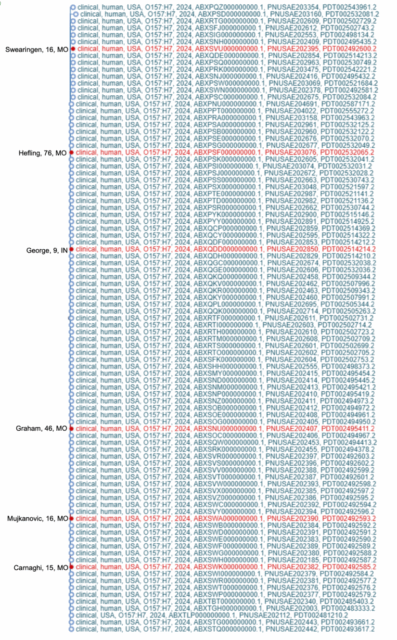
On November 25, 2024, PulseNet coded an outbreak of E. coli O157:H7 2411MOEXH-2. At the time of closing, this investigation included 89 cases across 15 states: AR (2), CO (1), IL (7), IN (8), KS (1), KY (1), MO (50), MT (1), ND (2), NE (3), OH (8), PA (1), SD (1), TN (1), WI (2), all related within 0-4 alleles by cgMLST. Isolation dates ranged from November 7, 2024, to December 1, 2024. Reported onset dates (n=83) ranged from November 4, 2024, to November 30, 2024. Ages ranged from 4 to 90 years with a median age of 24. Sixty of 88 cases (68%) were female. Outcome information was available for 74 cases, of which 36 (49%) were hospitalized. There were 7 reported cases of HUS, and 1 death attributed to this outbreak.

A case in this investigation was defined as infection with E. coli O157:H7 with an isolate related to the outbreak strain within 0-4 alleles by cgMLST and isolation date ranging from November 7 to December 1, 2024.

This outbreak was related to six historical investigations: 2302MLEXH-1, 2210MLEXH-3, 2210MLEXH-2, 2209MLEXH-1, 2112MLEXH-1, and 2106CAEXH-1. The only vehicle identified was for 2112MLEXH-1, which was closed with a confirmed vehicle of organic power greens. The NCBI tree for this strain included numerous nonclinical beef isolates.

This outbreak was coded following notification from colleagues in MO after they identified and investigated multiple illness linked to events catered by the same MO-based caterer. These events occurred between November 6 and November 8. All events included the same menu items with a few modifications. MO colleagues conducted a retrospective cohort study at 2 of the events and found that salads were the only statistically significant menu item across both events. Salads contained an iceberg/romaine lettuce blend, carrots, purple cabbage, onions, canned pimento, canned artichokes, parmesan cheese, and a house made salad dressing.

In total, 7 subclusters were identified across the multistate outbreak. These included 3 MO catered events, an OH secondary school, an IN restaurant, and IL restaurant, and an IL event catered by a different MO-based caterer. Salads were the common link across all 7 subclusters, and cases in all subclusters ate an iceberg/romaine lettuce blend. CDC deployed a focused questionnaire on November 26, 2024; 27 questionnaires were returned. Epi information was available for 65 cases, of which 60 (95%) reported consuming any type of leafy green prior to illness. Of 57 cases who could remember the exact type of leafy green consumed, 50 (88%) consumed romaine lettuce. This is statistically significantly higher than the background rate of 49% from the FoodNet Population survey. 

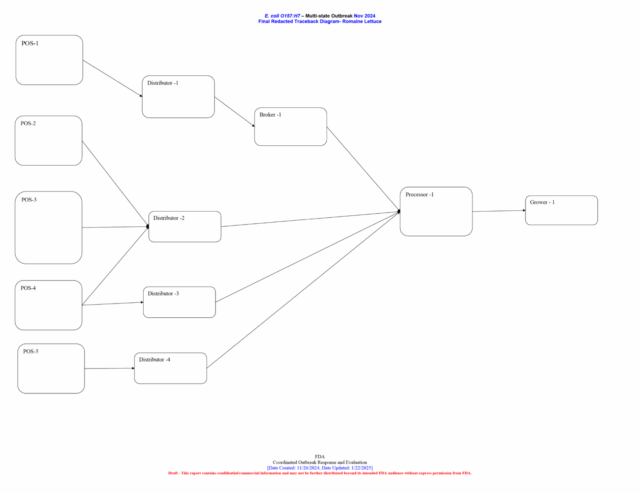
A traceback investigation was initiated in response to an E. coli O157 outbreak with leafy greens as the suspected vehicle. Each case included in the traceback investigation reported consumption of leafy greens prior to illness onset. Based on information available at the points of service (POS), the traceback focused on iceberg and romaine lettuce. The investigation consisted of three traceback legs representing twenty-eight cases and five POS. The three traceback legs identified four distribution centers, one broker, two processors, one grower, and one ranch. The traceback investigation determined that a sole processer sourced romaine lettuce from a single grower that would have been available at all points of service during the timeframe of interest. Additionally, romaine lettuce supplied to four of the five POS was traced back to a common ranch and lot. Through analysis of records, four lot of romaine lettuce were implicated, resulting in confirmation of romaine lettuce as the vehicle. 

Epidemiologic and traceback data supported the conclusion that romaine lettuce was the source of illnesses in this outbreak. CDC closed this investigation on January 15, 2025, following the elapsing of the surveillance reporting lag period and lack of new uploads. CDC closed this investigation as an outbreak with a confirmed vehicle of romaine lettuce. This outbreak will be reported to NORS with NORS ID: 511856.

Here is what I have been able to get from the CDC and FDA to date:

https://www.marlerblog.com/files/2025/04/2411MOEXH-2-Romaine-CO-DPHE-Records.pdf

https://www.marlerblog.com/files/2025/04/2411MOEXH-2-Romaine-E.-coli-FDA-Records.pdf

The CDC has declared that an outbreak of E. coli O121:H19 infections traced to carrots from Grimmway Farms has ended.

A total of 48 people were confirmed as victims in the outbreak. Patients were spread across 19 states. Twenty people were hospitalized. One person died, and another developed hemolytic uremic syndrome, a serious condition that can cause kidney failure and brain damage.

The Centers for Disease Control and Prevention reported that illnesses started from Sept. 6 to Nov. 10. The outbreak investigation started on Oct. 15. Grimmway Farms initiated a recall on Nov. 16.

According to the Food and Drug Administration, epidemiologic and traceback evidence showed that recalled carrots were the likely source of illnesses in this outbreak.

The FDA inspected Grimmway Farms of Bakersfield, CA, and collected environmental samples. Two outside environmental samples were positive for Shiga toxin-producing E. coli (STEC). 

“Although both strains of E. coli detected in the samples are capable of causing human illness, neither match the strain of E. coli causing illnesses in this outbreak. The strain of E. coli causing illnesses in this outbreak was not found in environmental samples,” according to the FDA’s outbreak update.

The FDA is working with Grimmway Farms on corrective and preventive actions.

In relation to the outbreak, Grimmway Farms recalled 35 brands and weight sizes of organic carrots and baby carrots. The recalled carrots were distributed nationwide and included popular brands sold at Walmart, Kroger, Whole Foods, Target, Sprouts, and other retailers.

The true number of outbreak patients was likely much higher than those confirmed. The CDC reports that for every confirmed patient in an E. coli outbreak, 26 go unreported. This is because some people do not seek medical attention, and others are not specifically tested for E. coli infection.

According to press reports, at least 19 people in Minnesota have been sickened by E. coli O157:H7 tied to a national recall of more than 167,000 pounds of potentially tainted ground beef, federal health officials said.

FSIS was notified of illnesses on November 13, 2024, and working in conjunction with Minnesota Departments of Agriculture and Health, FSIS determined that there was a link between the ground beef products from Wolverine Packing Co. and this illness cluster. On November 20, 2024, a ground beef sample collected by the Minnesota Department of Agriculture as part of an outbreak investigation tested positive for E. coli O157. To date, 15 case-patients have been identified in one state with illness onset dates ranging from November 2, 2024, to November 10, 2024. FSIS continues to work with the Minnesota Departments of Agriculture and Health on this investigation.

The infections occurred in people who had eaten hamburgers at Red Cow restaurants in the Minneapolis and Rochester areas, as well as the Hen House Eatery in Minneapolis. 

To date, no illnesses have been reported outside of Minnesota, according to the U.S. Agriculture Department. People fell ill between Nov. 2 and Nov. 14. The investigation is ongoing.